


Minimalist Work Capsule Reset for a Smarter Office Week
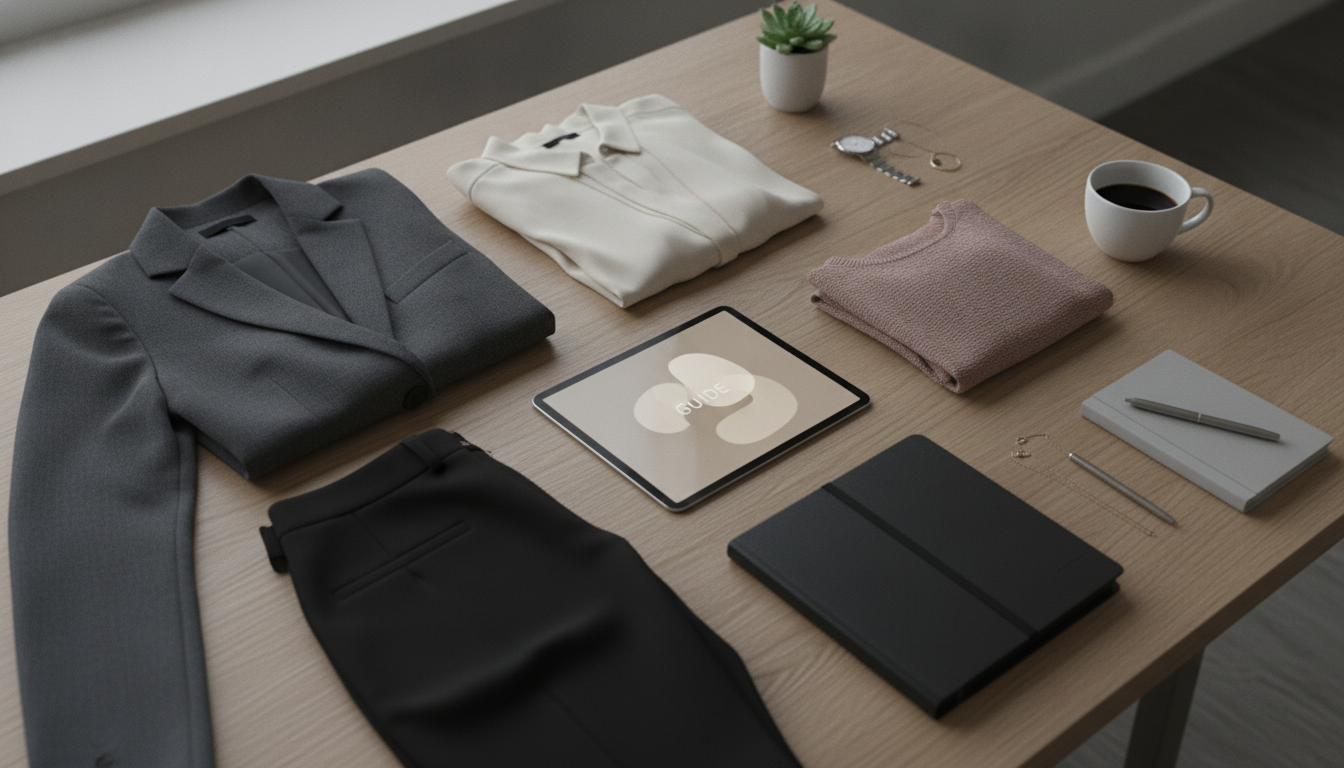
Your Fresh Start Work Wardrobe: A Minimalist Capsule Reset for a Smarter Office Week
A work wardrobe reset gets easier when decisions are made once and repeated well. This guide lays out a minimalist capsule approach—clear rules, a simple planner workflow, and outfit formulas that look professional without feeling restrictive. For more guidance, see The Ultimate Guide to Workplace Dress Codes.
What a “fresh start” work wardrobe actually changes
A true reset isn’t about buying a whole new closet—it’s about making the clothes you reach for feel predictable in the best way. When your pieces work together, mornings get faster and your confidence stays steady from desk time to meetings. For further reading, see The Corporate Capsule Wardrobe: 22 Pieces, 15+ Outfits ….
- Reduces daily decision fatigue by relying on repeatable outfit formulas (decision fatigue can even make shopping harder, as noted by Harvard Business Review).
- Creates consistency across meetings, video calls, and casual office days.
- Focuses spending on gaps and replacements rather than random new pieces.
- Improves fit and comfort so clothes support the workday instead of distracting from it.
Set your work style rules in 15 minutes
Think of rules as guardrails: they limit “maybe” purchases and make outfit-building nearly automatic.
- Choose a primary dress code lane: business formal, business casual, smart casual, or hybrid/remote.
- Define 3 “always-works” neutrals (example: black, navy, ivory) and 1–2 accent colors (example: burgundy or sage).
- Pick 2 polished silhouettes you trust: tailored straight + relaxed wide-leg, structured sheath + tapered trouser, etc.
- Decide non-negotiables: comfort level, footwear height, sleeve length, fabric preferences, layering needs.
- Create a short “no list” (itchy fabrics, fussy closures, dry-clean-only, clingy knits) to prevent repeat mistakes.
If a piece breaks the rules, it has to be exceptional to stay—and most items won’t be.
Edit what you own: keep, tailor, replace, release
Set a timer for 30–45 minutes and keep the process physical. A clean edit is the fastest way to see what’s missing.
- Pull a work-only rack: everything that could plausibly be worn to work in the next 2 weeks.
- Keep: fits well now, matches your color rules, can make at least 2 outfits.
- Tailor: great fabric or structure but needs hemming, waist shaping, sleeve shortening, or button repair.
- Replace: essentials that are worn out (black trousers, white blouse, belt, tote) or the fit no longer supports your day.
- Release: duplicates that don’t get worn, pieces that require constant adjustment, or anything that conflicts with the new rules.
For care-label clarity while sorting (washable vs. not), a quick refresher from The Spruce can help you avoid keeping items that don’t match your maintenance reality.
Build the minimalist work capsule: categories and counts that stay flexible
Aim for 12–18 core pieces that can cover 2–3 work weeks without feeling repetitive. Keep the counts simple and let repetition be a feature: it’s how you make getting dressed feel calm.
- Start with the base: 2 pairs of trousers, 1 skirt or dress, 1 dark denim (if allowed), 1 blazer or structured jacket.
- Add tops that layer well: 4–6 (mix of blouse, knit tee, fine gauge sweater, button-up).
- Include 2–3 third pieces: blazer, cardigan, trench, knit jacket—these create “instant professional” structure.
- Footwear: 2–3 pairs (one comfortable all-day option, one polished meeting option, one weather-proof option).
- Bags and belts: 1 work tote/backpack, 1 crossbody for commute, 1 belt that matches main shoes.
Simple work capsule blueprint (mix-and-match core)
| Category | Recommended count | Best neutrals | Notes for easy outfits |
|---|---|---|---|
| Trousers | 2 | Black, navy, charcoal | Choose one tailored and one relaxed; both should work with flats. |
| Skirt or dress | 1 | Black, navy, taupe | A knit or woven piece that works with blazer and cardigan. |
| Tops | 4–6 | Ivory, light blue, soft white | Prioritize non-sheer fabrics and sleeves that fit under jackets. |
| Third pieces | 2–3 | Black, camel, navy | A blazer + one softer layer covers most office temperatures. |
| Shoes | 2–3 | Black, nude, brown | Comfort pair first; meeting pair second; weather pair third. |
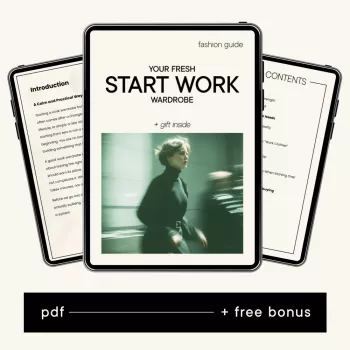
Want a step-by-step checklist and a simple tracking layout to keep the capsule from drifting? Your Fresh Start Work Wardrobe – Minimalist Work Capsule Guide (Digital Download) organizes the edit, outfit planning, and gap-shopping into one repeatable system.
Outfit formulas that work on repeat (without looking repetitive)
Formulas keep you from reinventing the wheel. The variety comes from swapping the third piece, changing your shoe, and rotating one accent at a time.
A practical weekly planner routine for a calmer morning
Smart fabric choices for a professional reset
For a deeper dive on a popular soft, breathable option for layering tops, see Modal Magic: The Soft Fabric Revolution You Need to Know.
Make it stick: a 30-day reset plan
Use the digital planner to keep your capsule organized
If you want the whole workflow in one place—from rules to outfits to gap shopping—use Your Fresh Start Work Wardrobe – Minimalist Work Capsule Guide (Digital Download) as your weekly reset template.
FAQ
How many pieces should a minimalist work capsule include?
Plan for 12–18 core pieces, then adjust based on laundry frequency, dress code, and climate. Many people count shoes and outerwear separately since they rotate differently than tops and bottoms.
What if the office dress code is inconsistent (some days casual, some days formal)?
Build around one polished baseline (clean trousers + elevated top), then use third pieces and footwear to dial up or down. The same trouser-and-top can read casual with sleek sneakers, standard with loafers, and meeting-ready with a blazer and low heel.
How can outfits look different with a small capsule?
Rely on repeatable outfit formulas, then rotate one variable: third pieces, accent colors, or accessories. Small silhouette shifts (tailored trouser vs. relaxed trouser, blazer vs. cardigan) create variety without adding more clothing.












Leave a comment